

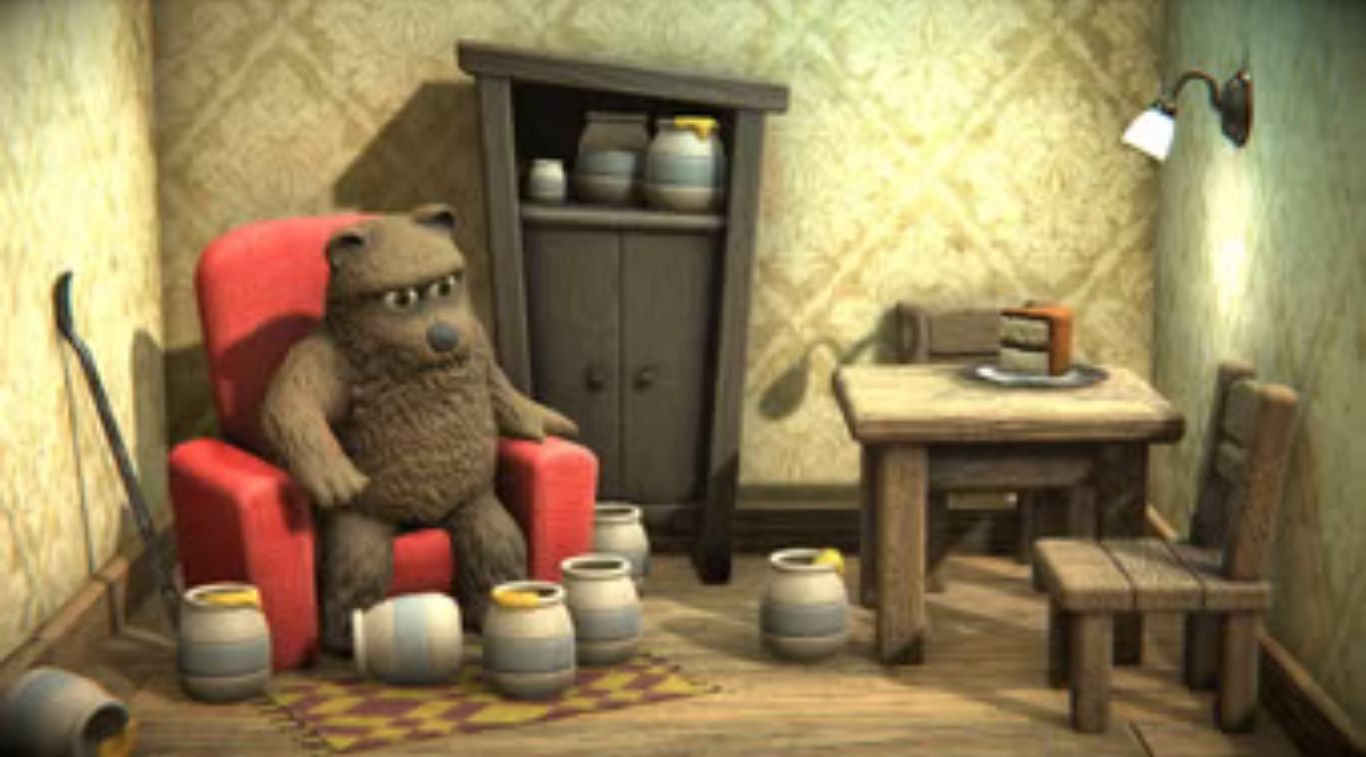
La Madriguera is a surreal, exploratory experience where reality is not fixed but constantly shifting, fragmented, and elusive. Rather than relying on direct input or clear objectives, the game invites players to engage through observation and behavior, responding intuitively to subtle cues. As you move through a looping, ever-morphing environment, meaning emerges not through exposition but through implication—glimpses of memory, the echo of footsteps, and the quiet accumulation of perceptual changes that whisper of something just out of reach. T
here is no map, no clear mission, no voice to guide you—only the uncanny sense that the world is changing beneath you, that something familiar has become strange, and that understanding lies not ahead, but hidden in the act of noticing.
Read More: Blue Lock: Rival Forces
Repetition with Intent
In La Madriguera, repetition is not redundancy—it’s the foundation of its design. The world operates in deliberate cycles, drawing players through the same corridor again and again, each pass revealing subtle, disquieting shifts: a picture frame slightly askew, a doorway where none existed before, wallpaper that seems just a shade too warm. The environment becomes a test of perception, memory, and attention to detail, demanding that players stay attuned to what feels almost familiar.
Invisible systems respond to rhythm and presence—movement patterns trigger unseen changes, objects shift their behavior based on where and how you look, and space itself bends through recursive, geometry-warping loops. The result is a deeply personal gameplay loop where progression hinges entirely on how you explore, ensuring no two journeys are ever the same.
Interaction Without UI
In La Madriguera, interaction dissolves into the environment—no menus, no dialogue boxes, no button prompts. There is no interface to guide you because guidance is an illusion. Instead, meaning emerges through presence and intuition. Standing still becomes a choice. A long stare might shift the world around you. Lingering too long in one place can open doors—or close them. The game invites slowness, rewarding patience with revelation and unease in equal measure.
- Turn deliberately; things behind you may not be where you left them.
- Revisit familiar spaces—anomalies reveal themselves over time.
- Pause. Wait. Let the space respond.
Without explicit feedback, every motion carries intention. The world reacts in silence, and that reaction becomes your only means of understanding.
Soundscapes as Mechanics
In La Madriguera, sound isn’t merely atmosphere—it’s a core mechanic, a hidden language that reshapes how players navigate and perceive the world. Ambient audio, musical patterns, and environmental noise form a shifting soundscape that actively guides, obstructs, or alters the path forward. Some doors respond only to rhythm—open only if you walk in time with a looping melody. Elsewhere, reversed speech murmurs cryptic clues, requiring you to slow down, listen closely, and attune yourself to the cadence of distortion.
Footsteps—yours or another’s—may be signals. Directional hums suggest alternate routes. Silence, too, becomes loaded with possibility.
Players often find themselves returning to familiar rooms not to see, but to listen—to catch what’s different, what’s trying to speak through sound alone. Here, progress is not about control but attention. The game invites a quiet kind of play: interpretive, patient, and attuned to a world built as much for the ear as for the eye.
Frequently Asked Questions
Frequently Asked Questions
What kind of game is La Madriguera?
La Madriguera is a surreal, exploration-driven experience. There are no explicit objectives, HUD elements, or dialogue—progress is made through behavioral interaction, perception, and interpretation. It’s not about solving puzzles in the traditional sense, but about noticing the world as it shifts around you.
Is there a story?
Yes, but not in a conventional form. The narrative is fragmented, emerging through memory, environmental changes, and symbolic elements. It’s meant to be pieced together through experience and intuition, not exposition.
How do I “progress” in the game?
There are no traditional checkpoints or goals. Progress is felt through changes in the environment and the player’s awareness. Repetition, subtle observation, and behavioral experimentation are the key methods of interaction.
Can I lose or fail?
There is no fail state. The game resists binary outcomes. Instead, you loop, return, revisit—and in doing so, discover. What might seem like stasis is often transformation.
Is there a map or guidance system?
No. Orientation is based on memory and observation. You’ll begin to recognize patterns and spatial anomalies over time, but navigation is intentionally fluid and unreliable.
How long is the game?
Playtime varies depending on how deeply you explore and how attentively you engage. Some players may reach a form of closure in 1–2 hours; others may explore for much longer.
Conclusion
La Madriguera is not a game that gives answers—it invites questions. It is a space to get lost in, to notice what’s missing, what’s changed, what’s never quite the same. It rewards those who observe, who linger, who listen to the silence between steps. There are no objectives, only presence; no victory, only awareness. In this shifting, recursive world, progress is measured not by distance, but by perception. La Madriguera is a descent—not into darkness, but into the quiet, uncanny edges of meaning itself.
